
Choosing a Yucaipa Resident Lookup Record
The right first source depends on the clue. An address points to the assessor and GIS. A case number points to CAP. A family event points to ARC or CDPH vital records. A business name points to a fictitious business name search and SOS bizfile. A historic surname may belong in a regional directory or newspaper. A Yucaipa resident lookup becomes reliable when the record is selected for its actual question rather than for the amount of information it appears to contain.
| Record | What it can confirm | Where | Access |
|---|---|---|---|
| Assessor parcel | Roll owner, parcel, situs, possible mailing destination | ARC Parcel Access | Free; owner is not the same as resident |
| Recorded instrument | Grantor, grantee, document type, date, and legal description in the image | ARC Recorder's Index | Free index; image by order or counter visit |
| Superior Court case | Party name, role, case type, dates, events, disposition when displayed | San Bernardino CAP | Public index with remote limits |
| Vital record | Event identity, date, place, and relationships when eligible | ARC or CDPH | Authorized or informational copy rules |
| License or business filing | Professional status, entity role, agent, filed address | California state systems | Free search; role is not residence proof |
| Directory or newspaper | Dated name, household, address, obituary, or social clue | Libraries, NARA, archives | Collection and year dependent |
Use two independent attributes before deciding that a result is the same person. A middle initial, spouse, age band, APN, filing branch, occupation, or timeline can do the work. Keep a negative result too. No CAP match may mean a restricted case, a pre-1998 gap, spelling variation, another court, or no case at all.
Yucaipa CAP Search Fields and Results
San Bernardino Superior Court's Court Access Portal is the principal remote path for permitted county case information. The portal accepts a full case number as an alternative to a name search. Name fields include first, middle, last, and business name. Case type, division, filing date, calendar tools, and reset controls can narrow a result. Legacy jurisdiction prefixes such as SS, DS, JS, RS, VS, PS, and other branch codes can help when an old paper reference contains a case number.
| Case number | Use the full format and prefix when it is known. |
|---|---|
| First and middle name | Use the legal form; the middle name helps separate common matches. |
| Last name or business name | Try spelling variants and the name as the party appears in the source. |
| Case type or division | Civil, criminal or traffic, family, and probate access can differ. |
| Filing date and calendar | Use as refiners when the portal presents those controls. |
| Accept, search, and reset | Read the access notice, run one defined query, and reset before a second name. |
A typical public result can show case number, title, parties and roles, filing date, court location, register-of-actions events, hearings, disposition, status, and documents eligible for remote viewing or purchase. A docket is a chronological case log. It is not the complete pleading file, and a result is not a conclusion about a person's character.
The San Bernardino Court Access Portal is the official remote starting point.
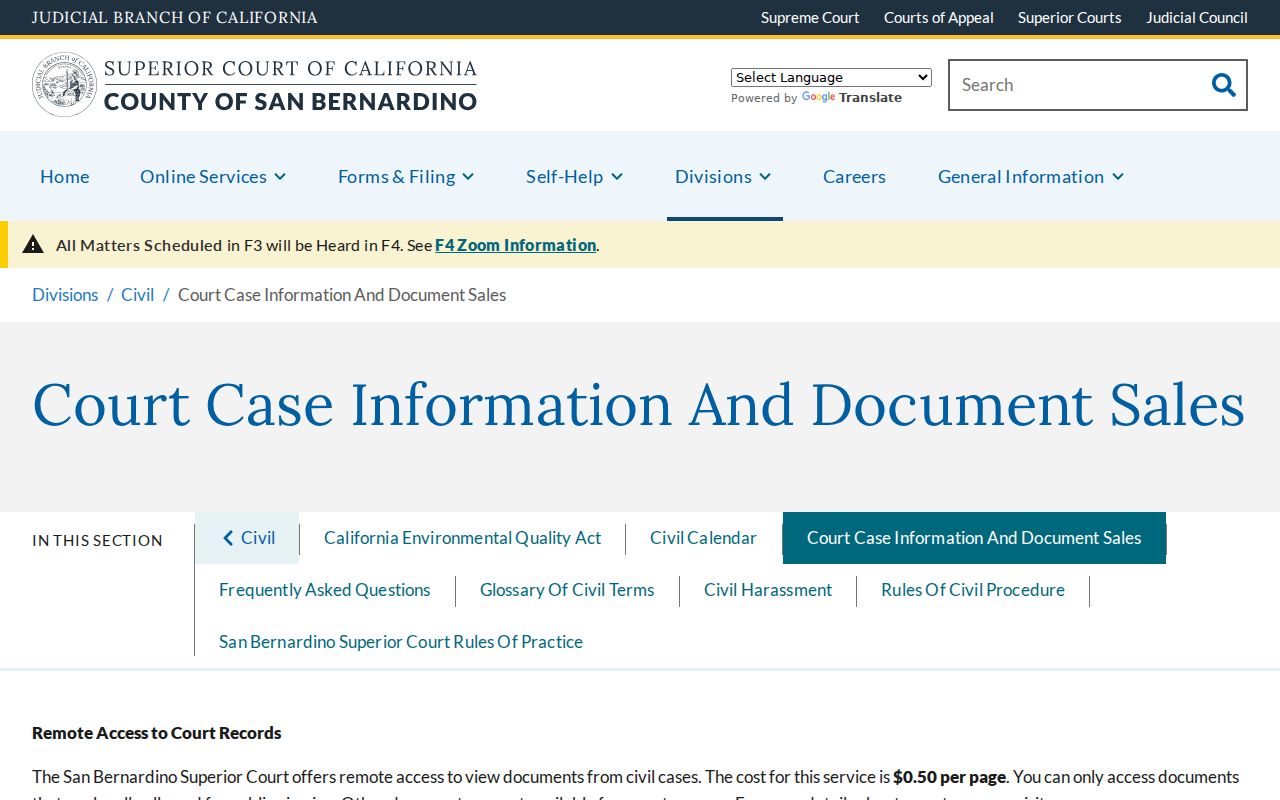
The court image belongs beside the search-field inventory because the portal result is a locator that may require a clerk request for context.
Yucaipa Court Results and the Pre-1998 Gap
CAP became the primary San Bernardino public case system in October 2022 after the classic public portal was retired. Court guidance warns that hosted data can contain errors or omissions. Legacy guidance also says case data is limited before 1998. A thin web result for an older Yucaipa matter is therefore a branch question, not proof that the case never existed.
For an older or missing file, identify the likely case type and contact the correct filing district. A court copy-request form asks for requester information, branch address, plaintiff or petitioner, defendant or respondent, case number, requested document and filing date, division, delivery details, and payment. Case copies have historically cost $.50 per printed side, plus mailing, certification, or research charges. A 2026 court notice says name-search fees were eliminated, but the current schedule controls for other services.
California Rule of Court 2.503 explains the access framework behind remote and courthouse records.
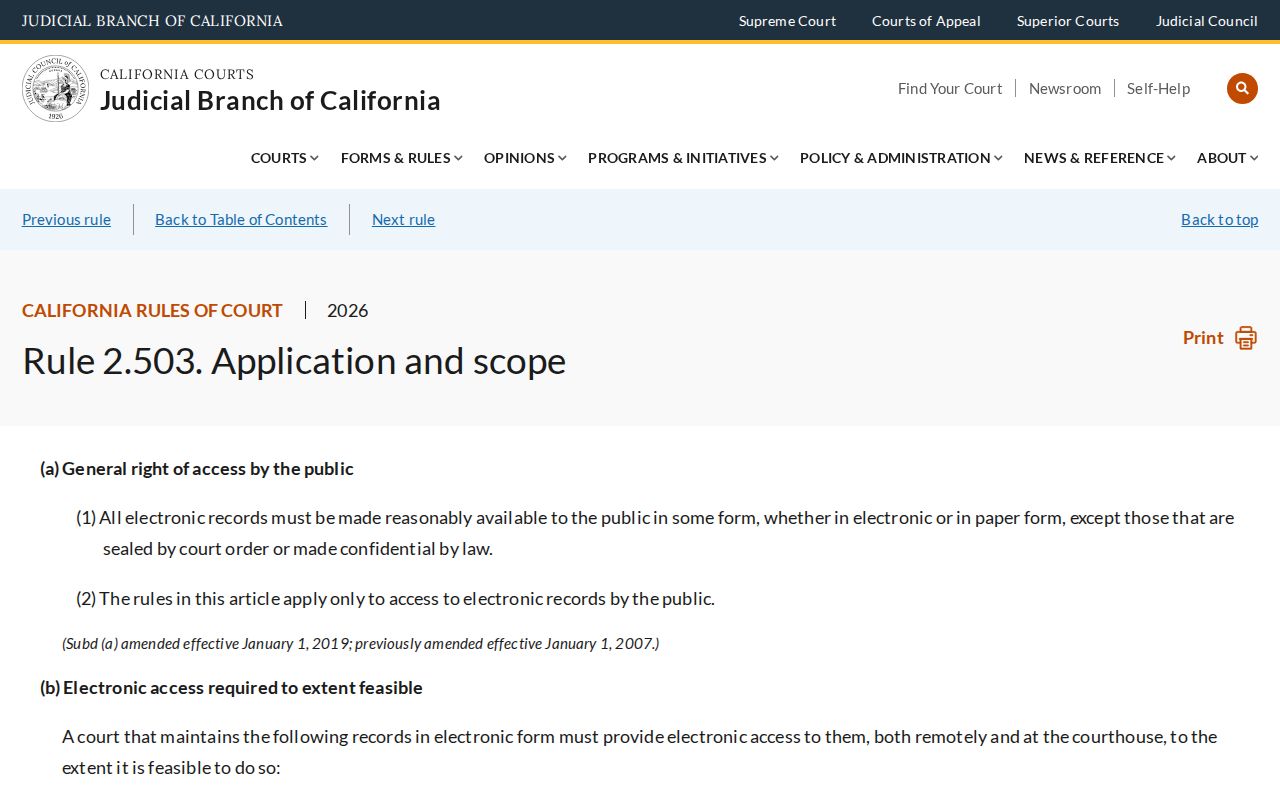
The rule image makes the remote-access boundary visible. Sealed, juvenile, adoption, confidential mental-health, and protected-victim records are not ordinary missing-name results.
Match a Yucaipa Name with Time and Role
A Yucaipa name search can fail through a same-name collision even when every individual result is real. Begin with two attributes. Preserve middle initials, suffixes, spouse or associate names, age range, occupation, APN, case location, and date. Search hyphenated and unhyphenated names, former surnames, initials, surname-first formats, trust names, and entity names when the record supports those forms. Do not infer identity from a surname or from a matching city alone.
| Match clue | Why it helps | Safe interpretation |
|---|---|---|
| Middle name or initial | Separates common first and last names | Strong clue when repeated across independent records |
| APN and legal description | Connects a person to one parcel | Shows a recorded property role, not a full household |
| Case branch and filing date | Places a party in a court and time | Read the role and disposition before drawing meaning |
| Spouse or family link | Connects a historical or probate record | Confirm the relationship in the underlying source |
| Business role | Distinguishes owner, agent, manager, or applicant | Business address is not automatically a home address |
A 2008 deed and a 2025 license do not prove a continuous address. A directory entry anchors a year. An obituary may identify relatives but contains family-supplied claims. Use a source's own date and role, and write “possible match” until an independent record closes the gap.
Verify One Yucaipa Resident Step by Step
Verification means testing one identity against records that were created for different purposes. It does not mean collecting every mention of a name. A useful path starts with an address or dated event, then moves to a record that can confirm a role. Certified copies are different from index entries. An index is a finding aid. A certified copy is an official copy issued under the custodian's rules.
- Anchor the name to a known Yucaipa address, family link, case number, or dated directory entry.
- Use the assessor or a historical directory to find the parcel, household clue, or time frame, then save the source date.
- Search CAP with the name and variants, and compare branch, party role, filing date, and case type.
- Check a vital index or authorized application path when an event needs confirmation, not just a name lead.
- Order an official image or certified copy from the correct custodian only when the requester qualifies.
- Docket
- A chronological case record showing filings, events, hearings, and status entries.
- Index versus image
- An index points to a record. An image or certified copy supplies the underlying instrument or certificate.
- Certified copy
- A custodian-issued copy whose certification states it is a true official copy for the permitted use.
- Disposition
- The recorded outcome or status of a case, which must be read in context.
Yucaipa Vital Records: Authorized or Informational
California vital records use an authorized-versus-informational system, not a simple “closed for N years” rule. Health and Safety Code sections 103525 and 103526 govern informational and authorized copies, while section 103550 covers related access. An eligible person may request an authorized certified copy with the required statement or proof. Other requesters may qualify for an informational copy marked that it is not valid to establish identity, with protected portions redacted.
San Bernardino County ARC handles county births and deaths and marriage licenses purchased in the county. CDPH is the statewide custodian. The county form asks for record type, adopted status for a birth, public or confidential marriage, number of copies, names, date and place, parent or spouse names, requester relationship, purpose, copy type, identity, and notary details. Confidential marriages are limited under Family Code section 511. Adoption files are sealed under Family Code sections 9200 through 9203 unless a statutory or court route applies.
Vital-record myth. A genealogy index can locate an event without granting access to the certified identity document. Ask first which copy type and requester status apply.
Yucaipa Probate and Heir Research
Probate is a lawful family-history path when a deceased person and an estate need to be connected. Search the decedent in CAP or the correct Superior Court branch, then review permitted petitions, notices, inventories, and orders for petitioners, heirs, and service addresses. A deed can extend the trail after probate, but only when its APN or legal description matches the estate property. Wills are not held as a general public registry by the County Clerk.
Close an identity loop with a death record, obituary, or cemetery entry only after checking the source role. An obituary can list relatives and former addresses but contains family-supplied information. Probate notices can carry formal names and relationships, while remote access may be limited. Estate research is about a deceased person and an identifiable record, not a general search for living relatives.
Yucaipa Federal and Custody Record Branches
Some name questions leave local records. Federal cases for Yucaipa fall within the U.S. District Court for the Central District of California and use PACER. Search by party or case, then check the docket and document context. PACER charges by page under Judicial Conference policy, with a quarterly fee waiver at the stated threshold. Court opinions may appear through secondary repositories, but the federal court and PACER remain authoritative.
Custody searches are separate systems. The Federal Bureau of Prisons locator handles federal custody. The San Bernardino County Sheriff locator handles county bookings. CDCR handles California state custody. A no-result can reflect release, spelling, another jurisdiction, a sealed or juvenile matter, or data delay. A booking is an allegation record, not a court disposition.
PACER's federal docket system shows the federal branch for a Yucaipa-related case.
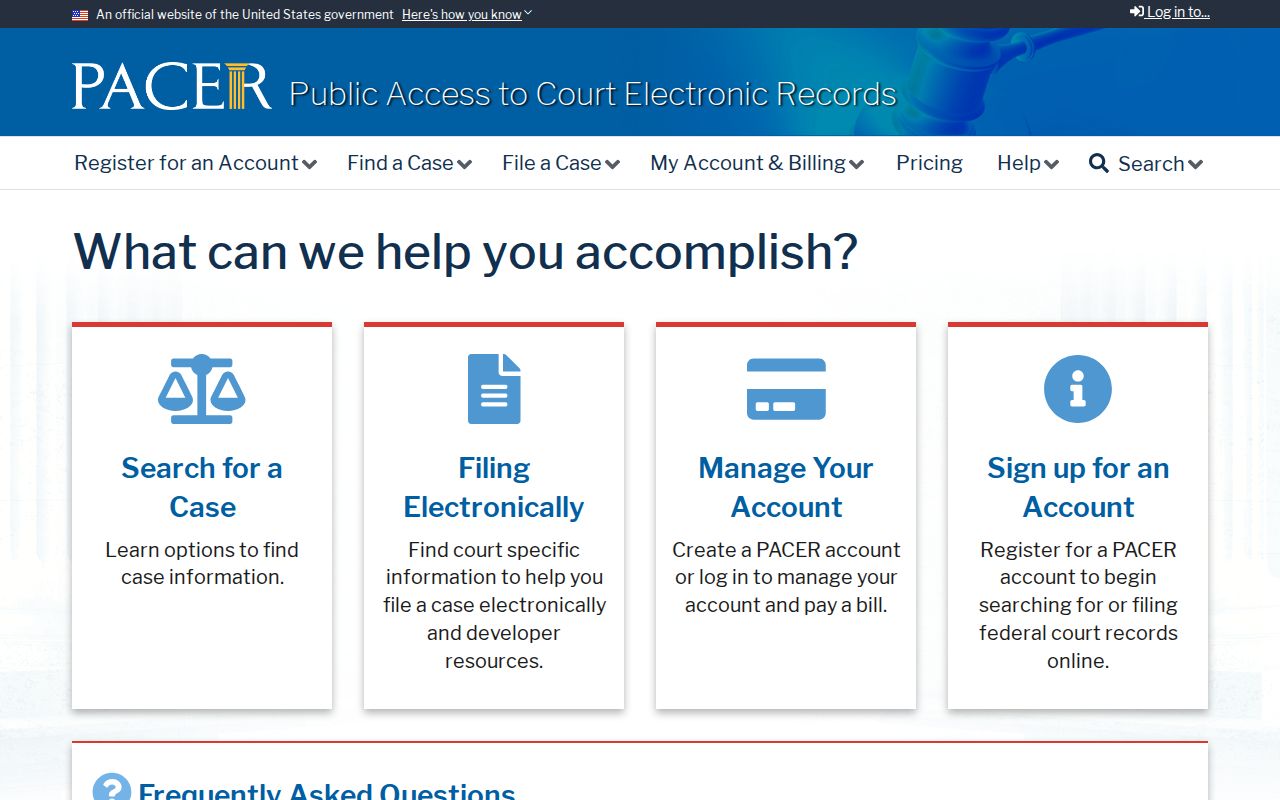
The PACER image marks the point where a county case search ends and federal docket research begins.
The Bureau of Prisons locator is a separate federal custody source.
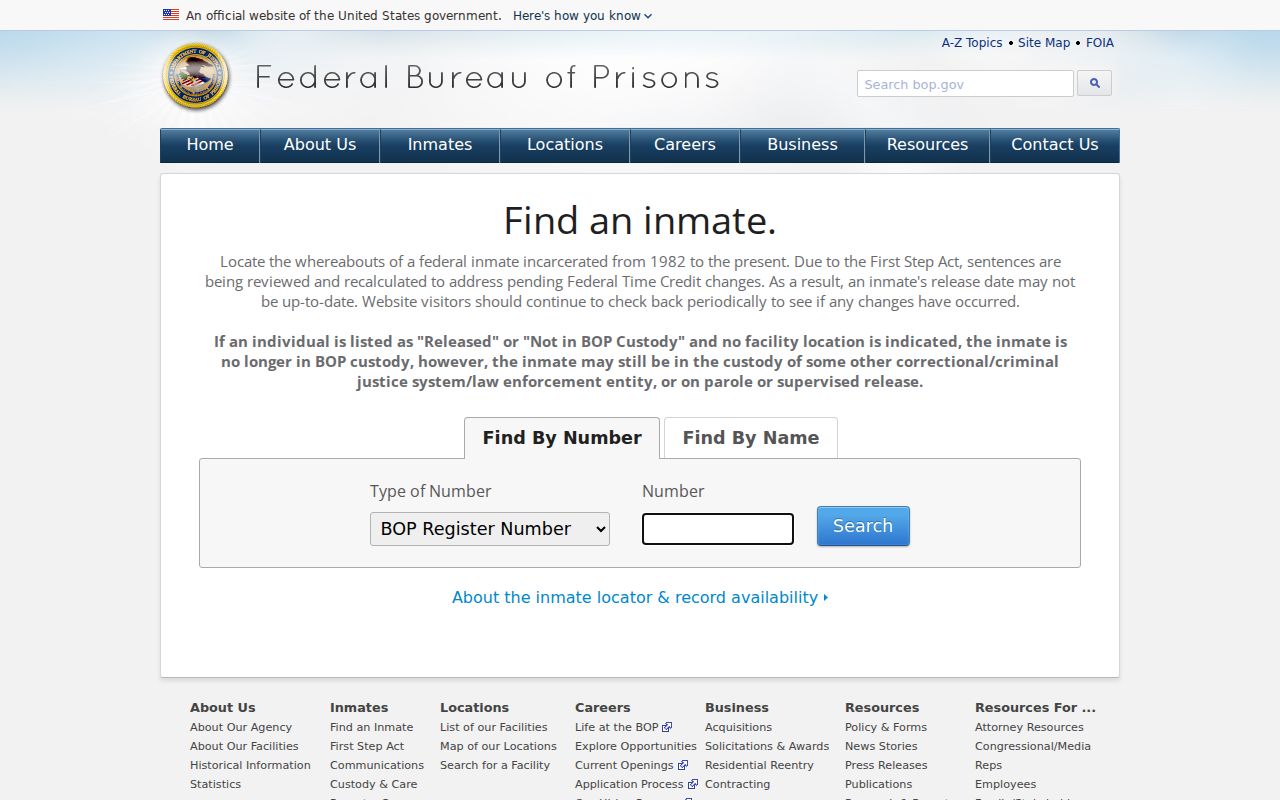
The federal locator image underscores that custody databases have their own scope and should not be treated as a general resident roll.
Use Yucaipa Voter Status Only for Your Own Record
California My Voter Status requires first name, last name, date of birth, and a California driver's license or ID number or the last four digits of a Social Security number. It can show the authenticated voter's registration details, party preference, language choice, ballot status, polling place, and election information. It cannot be used as a public neighbor directory. Elections Code section 2194 limits voter-file disclosure to specified election, scholarly, journalistic, political, or governmental purposes. Government Code section 7924.000 protects home address, phone, email, signature, and identifiers.
San Bernardino County publishes weekly registration counts and precinct context. Those aggregate products can support civic understanding without exposing a street roster. If a voter needs to correct a record, contact the county Registrar of Voters or the Secretary of State. Do not infer that an inactive record establishes a precise move date.
Correct the Yucaipa Source, Not a Copy
A compilation can repeat an error from an official record, but changing the compilation does not change the source. Ask the Assessor about assessment data. Ask the Recorder about an index entry or copy. Ask the court clerk about a docket or court process. Ask the Registrar of Voters or Secretary of State about voter registration. Ask ARC or CDPH about a vital certificate. Ask a licensing board about a license. A city public-record request cannot correct another custodian's database.
California's CCPA rights and the 2026 Delete Request and Opt-out Platform apply to covered commercial data brokers. Safe at Home protects qualifying participants with a substitute address. An absent address can be a privacy safeguard. Record the correction request, date, custodian, and response, and never send identity documents to an unverified contact.
Legal Boundaries for a Yucaipa Resident Lookup
A Yucaipa resident lookup is for lawful personal research, family history, reconnecting, estate questions, civic understanding, and personal safety. Public records are not permission to watch, intimidate, or pursue a person. California stalking law, harassment remedies, voter-data rules, DMV privacy rules, and registry warnings can apply when location or identity data is misused. Treat protected, sealed, confidential, and redacted records as limits, not obstacles to bypass.
Lawful use. Keep every result tied to its source, date, and role. Do not use a resident lookup to stalk, harass, threaten, or harm anyone.
When a name search ends in uncertainty, stop at the uncertainty. An accurate “not confirmed” is more useful than a confident namesake error.